Abstract:
In this talk we present a view of Artificial Consciousness (called SP-Consciousness) as an interplay between sequential and parallel computation in complex computing networks. The main gain from this view is a design methodology which keep under control the complexity of a hierarchy of systems of systems.
Modern studies on understanding consciousness have exploded after 1953 when Ibsen established the first Intensive Care Unit. Now, we know that a body and a brain can “live” even when their connection is interrupted, putting great pressure on deciding when a person is conscious or not, alive or dead.
First, we review two leading theories on finding the neural correlates of consciousness: Integrated Information Theory (IIT) and Global Workspace Theory (GWT). The IIT approach puts more emphasis on the structure of a network supporting consciousness, while GWT is more suited to explain the interaction with a conscious network.
Then, we go to the technical part of the talk. We incorporate suggestions from IIT and GWT theories into the Mixed Network Algebra formalism (MixNA), described below.
Symmetric monoidal category with feedback (a.k.a. traced monoidal category), introduced by Stefanescu in 1986, is a versatile algebraic structure. Initially, an additive interpretation of the monoidal operation was considered, aiming to model control structures like flowchart schemes or finite automata. Later on, with a multiplicative interpretation of the monoidal operation, the structure was successfully used to capture parallel computing models, in particular data-flow networks. Classical sequential programs have limited parallelism, while parallel data-flow networks have limited control. Hence, it is desirable to have a setting freely mixing control and parallelism. Symmetric semiringal categories (having two monoidal operations: addition and multiplication) with feedback has been proposed as an algebraic candidate to study this complicated setting. Agapia programming model and Virtual Organisms are two instances of the MixNA formalism.
Finally, we illustrate the approach with a design of a hierarchy of virtual organisms. Within each virtual organism the processing is massively parallel, in concordance with the IIT theory. When we compose virtual organisms, GWT suits better, with its emphasis on selecting one action at a time and broadcasting the choice within the virtual organism. These steps are repeated at the next level of the hierarchy keeping the full network design at a desirable complexity scale.
Short Bio:
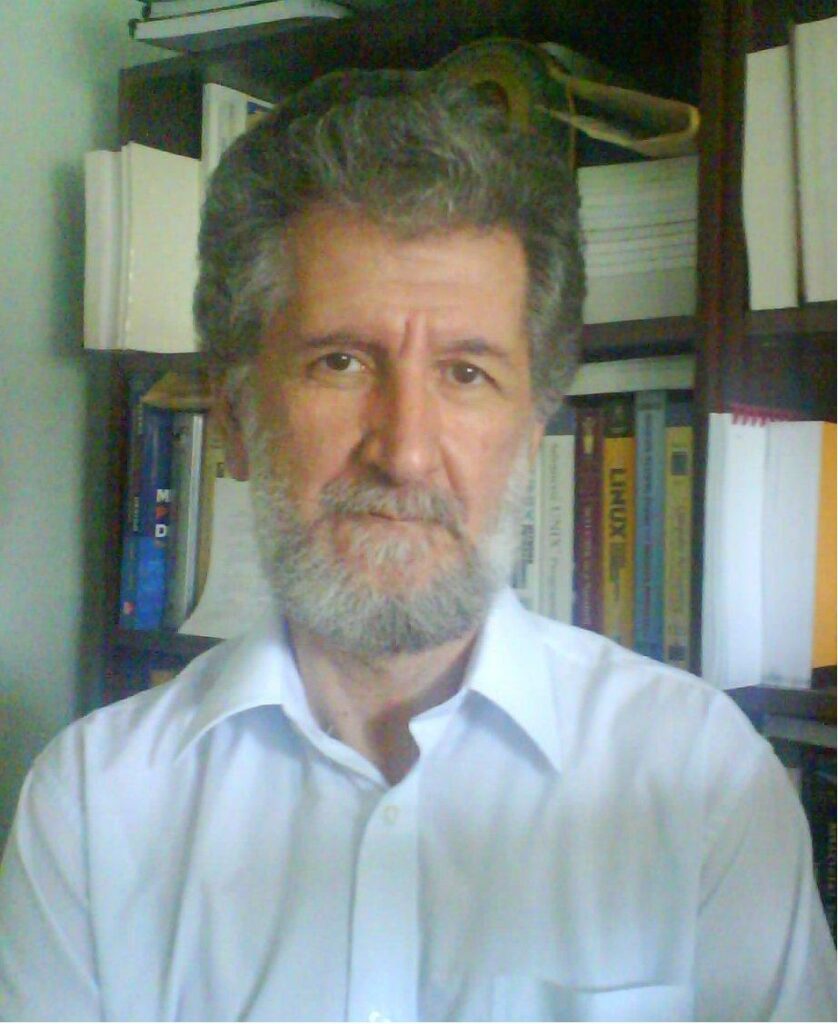
Gheorghe Ștefănescu is an Emeritus Professor of the University of Bucharest. He was a Computer Science professor at the University of Bucharest and director of its Computer Science Department and of its Computer Science Doctoral School.
He received his BSc, MSc, and PhD from the University of Bucharest, the latter one in 1991 under the supervision of Sergiu Rudeanu. Before joining the University of Bucharest in 1995, he had spent 15 years as a researcher at the Simion Stoilow Institute of Mathematics of the Romanian Academy.
He has broad research interests spanning Computer Science, Mathematics, Biology, Cognitive Sciences, etc. In Computer Science his main research interests are in programming languages with an emphasis on formal methods as applied to distributed systems. In 1986 he has discovered an algebraic structure, named biflow (a.k.a. traced monoidal category) and has developed network algebras, a uniform formalism covering algebraic models for both classical control structures (e.g., flowchart schemes) and distributed systems (e.g., dataflow networks), as well as a mixed setting combining both structures.
He wrote over 100 papers, has extensive visits abroad (including a 3 years Senior Fellow position at NUS/Singapore), has been offered several grants and awards (including the Grigore Moisil award of the Romanian Academy).